Some places travel through centuries, carrying stories, souls, and tales, transforming themselves to better write their future. Acolytes is one of those rare spaces where the “before/after” of the renovations is not just a refurbishment, but a true rebirth. At the heart of a Renaissance building dating back to 1537, this unique project delicately combines heritage, art, nature, and sustainable gastronomy.
A Renaissance gem with a thousand stories
The Acolytes building, from the 16th century, carefully preserves its old-world charm. Its main façade, overlooking Rue des Chevaliers on the edge of Place des Moulins, is lit by large semi-circular windows with delicate ironwork. The “bottle bottom” glass panes bring a soft light, creating a timeless atmosphere.
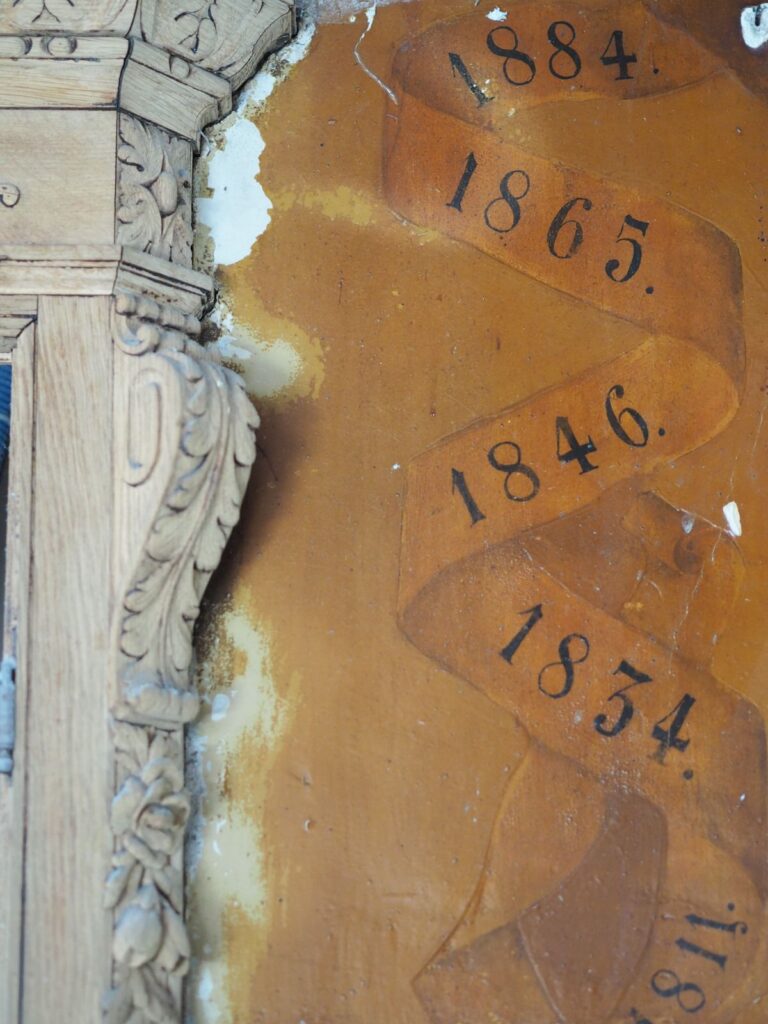
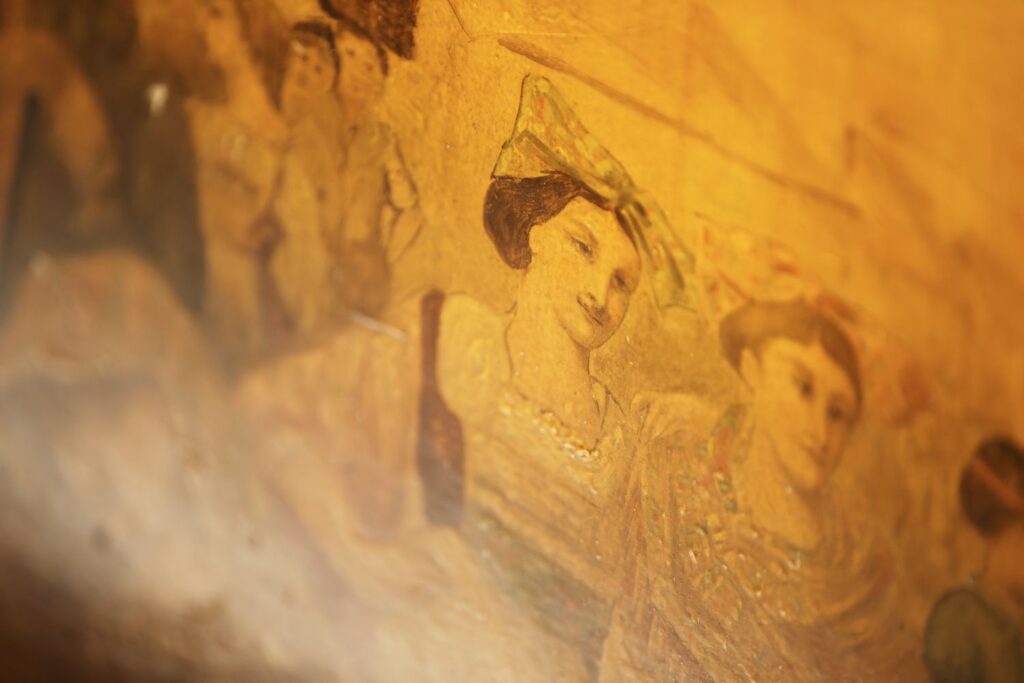
Inside, the eyes fall upon paintings that tell local life and history: Yerri Vetter, an iconic farmer, the Sélestat market, works by painter Félix Haffner. On a corbel carved to the left of Yerri, a whimsical coat of arms combines a pair of scissors, an iron, and a tape measure — a playful nod to the original purpose of the place. Other guild coats of arms appear on the left wall, bearing witness to the rich artisanal past of the house.
The 1880 renovations, done by local artist Alphonse Koffel, skillfully complemented and enhanced the decoration, blending history and the modernity of the time. These artistic and architectural layers give the place a unique heritage dimension, between tradition and renewal.
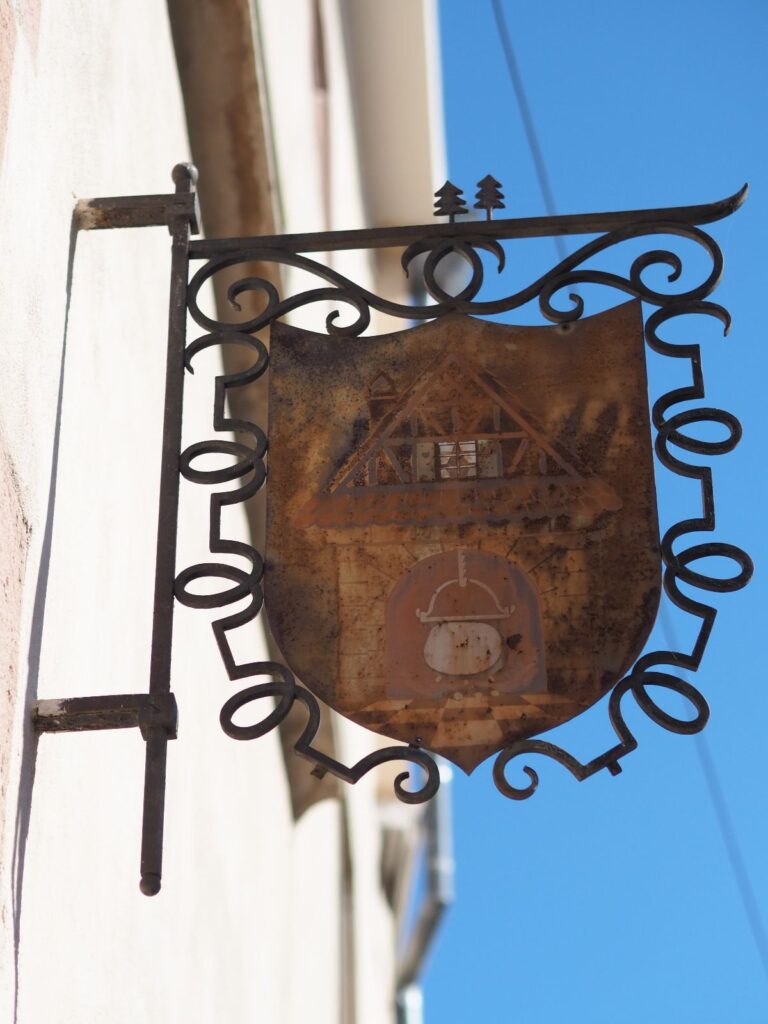
The “before”: preserving a living heritage
The challenge of the “before” in this adventure was immense: how to respect this soul-filled décor while providing Lucas Engel’s team with a functional, bright space adapted to a contemporary and committed cuisine? How to reconcile period elements — wood paneling, timber framing, frescoes, corbels — with a sustainable and environmentally sensitive approach?
This reflection guided every choice, enhancing natural light filtered through old glass roofs, preserving sculpted details and frescoes while introducing noble and responsible materials to bring comfort and modernity.
The project: a dialogue between craftsmanship and nature
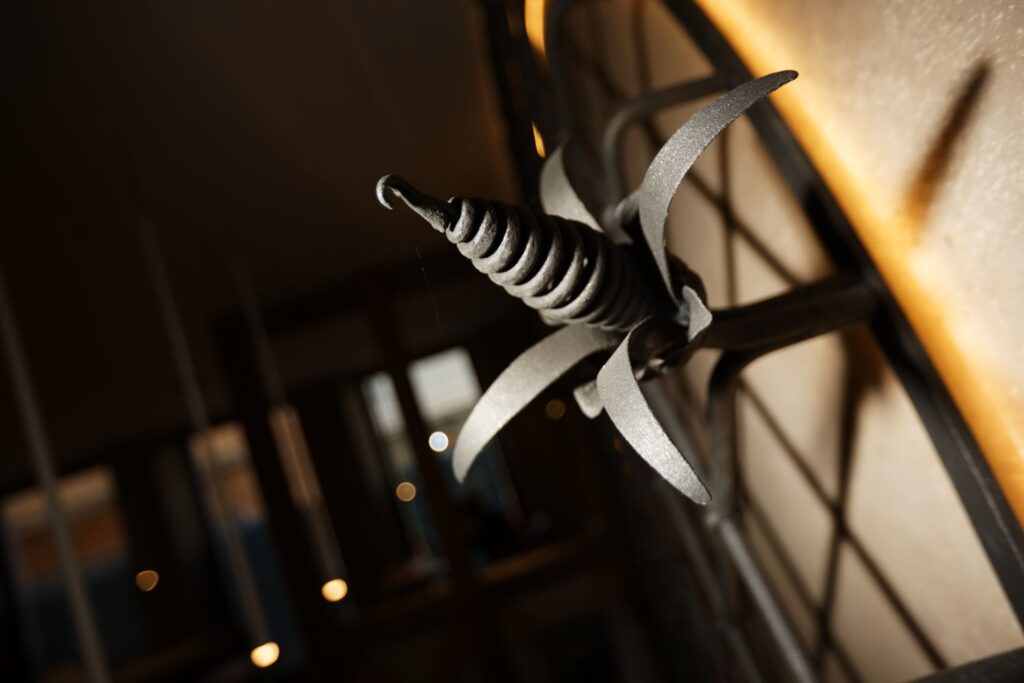
The project was realized in a spirit of collaboration and respect. Interior architect Nadia Gulino, in symbiosis with Chef Lucas Engel’s vision, orchestrated the transformation by playing with materials and light. Lime, sand, stone, and solid oak converse with old stones and ancient frescoes, creating a setting where past and present answer each other.
The décor, imbued with organic hues and natural textures, invites contemplation and relaxation. Artisanal tableware, green faience, and vegetal touches perfect a warm atmosphere faithful to the chef’s engaged and respectful spirit.
The “after”: a living setting for sincere gastronomy
Today, Acolytes is a place where history is savored as much as the dishes. Each meal is a celebration of the terroir, driven by a cuisine centered on product and nature, served in a setting where the memory of the place is everywhere.
The experience invites guests on a journey through time, where ancient frescoes coexist with contemporary furniture lines, where the light from old stained glass caresses the warmth of oak, and where every detail tells a story of passion, know-how, and commitment.
Before / After: a place reinvented with love and awareness
This project is far more than a simple renovation. It reflects a philosophy where gastronomy, heritage, environment, and art mingle to offer a unique experience. It is a tribute to time, nature, and the people who shape this place with rigor and sincerity.
At Acolytes, every stone, every fresco, every plate is a promise of emotion and respect. The “before/after” thus becomes an ode to rebirth, an invitation to fully savor history and nature in an exceptional setting.